Star of David, Multilayer Wall Decor Review
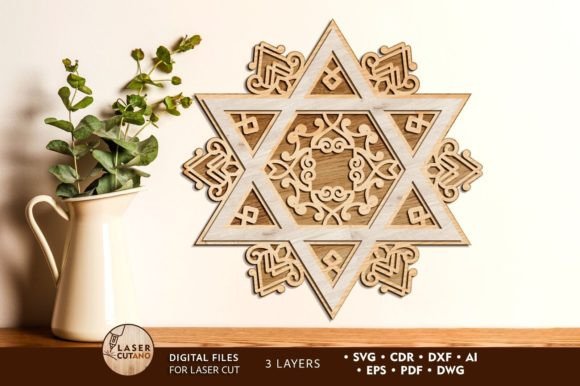
As a designer who has spent years navigating the intersection of digital files and physical textiles, I approach every new asset with a critical eye. When I first opened the Star of David, Multilayer Wall Decor file, my initial reaction was one of cautious curiosity. The description clearly states these are multilayer layout files prepared for laser cut and CNC router machines, not traditional embroidery hoops. This distinction is vital. While this specific product is engineered for Wall Decor via Laser Cutting, understanding its geometric integrity offers profound insights for us in the textile world. It forces us to ask: how does this iconic shape translate when we move from rigid wood or acrylic to soft, shifting fabric?
The Geometry of Faith and Design
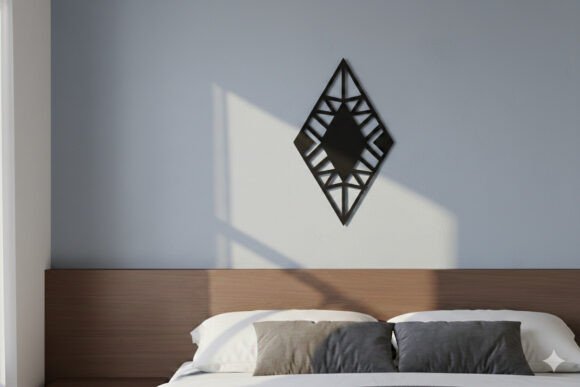
The Star of David, also known as the Magen David or Shield of David, carries immense cultural weight. In design terms, it is a study in perfect symmetry. The multilayer aspect of this file suggests depth, shadow, and dimensionality that flat single-line designs simply cannot achieve. When evaluating this for a potential project, even if adapted for a different medium, the visual personality is bold and structural. It commands attention without needing excessive ornamentation.
For an Etsy seller or a small shop owner looking to expand their catalog, the challenge lies in adaptation. If you were to interpret this multilayer concept into a machine embroidery design, you would be aiming for a look that mimics those stacked layers. Imagine a custom embroidered tote bag where the outer star is a dense fill stitch and the inner star utilizes a contrasting satin stitch. The result would be a tactile, high-end finish that elevates a simple canvas bag into a premium handmade product.
Real-World Application: From File to Fabric
Let’s walk through a realistic scenario. Suppose you are preparing a holiday collection for your boutique and want to create personalized pillow covers featuring this motif. You have the digital assets, but how do they perform? In a real-life embroidery situation, the "multilayer" concept translates to careful sequencing. You would need to ensure the bottom layer is stitched first, perhaps with a lighter thread color, followed by the top layer in a darker shade to create that illusion of depth found in the original laser-cut version.
This approach works exceptionally well on sturdy fabrics like denim for a sweatshirt embroidery project or heavy cotton for kitchen towels. However, the complexity increases significantly with delicate items. If you attempt this on baby embroidery projects, such as a onesie or a blanket, you must be hyper-aware of the stitch density. Too many layers of stitching can make the fabric stiff and uncomfortable against sensitive skin. In this context, the Star of David, Multilayer Wall Decor serves as a reminder that while the design is beautiful, its application must respect the end-user's comfort.
Where Caution is Required
Not every project is suitable for a complex, layered design. There are specific scenarios where this aesthetic requires careful modification:
- Small Hoop Sizes: Intricate multilayer details can get lost in a 4x4 hoop. The sharp points of the star might blur together if the hoop size is too restrictive.
- Stretchy Fabrics: On knits or jersey materials used for t-shirts, the tension required for multiple layers can cause puckering. A strong stabilizer is non-negotiable here.
- Curved Surfaces: Embroidering this on a cap is risky. The geometry of the Star of David relies on straight lines; curving them around a baseball cap brim can distort the symmetry unless the design is specifically re-engineered for that curve.
- Dark Fabrics: To achieve the "layered" look on black or navy material, you need high-contrast thread colors. Using dark threads on dark fabric will render the layers invisible, defeating the purpose of the design.
Visual Appeal and Commercial Viability
When selling finished goods, the visual clarity of your work dictates customer trust. A well-executed version of this design, whether adapted for embroidery or kept as a laser-cut wall piece, signals professionalism. For a craft business, offering a product that looks meticulously crafted rather than hastily printed builds brand consistency. Customers buying a personalized gift expect precision. If the points of the star are jagged or the layers are misaligned, the perceived value drops immediately.
Consider the holiday embroidery market. During Hanukkah or other Jewish holidays, there is a surge in demand for meaningful decor. A custom apparel item or an embroidered patch featuring this symbol can become a bestseller if the execution is flawless. The multilayer concept adds a modern twist to a traditional symbol, making it appealing to younger demographics who appreciate contemporary design aesthetics.
Practical Designer Notes for Success
Before committing to a large production run or listing this as a digital product, follow these essential steps:
- Test on Scrap Fabric: Never skip the test run. Stitch the design on a scrap piece of the exact fabric you plan to use. Check for pulling, gaps, or thread breaks.
- Review Thread Contrast: Ensure the difference between your "layers" is visible. Use a color wheel to select complementary shades that pop against your background.
- Inspect Small Details: Zoom in on your mockups. Are the corners of the star sharp? In embroidery, tight corners often require backtracking or trimming, which affects the final look.
- Check Licensing: Since the source file is described as a layout for cutting machines, verify the license terms before using it for commercial embroidery or selling finished items. Do not assume a file for one machine type grants rights for another.
- Compare Backgrounds: Test the design in black and white mockups to see how it reads without color distraction. Then, compare light and dark fabric backgrounds to determine versatility.
Final Thoughts on Design Assets
The Star of David, Multilayer Wall Decor represents more than just a shape; it is a lesson in structural design. While its primary function is for Laser Cutting and Wall Decor, the principles behind its construction offer valuable lessons for any maker working with textiles. Whether you are creating a tote bag design, a wedding gift, or a line of small shop products, the key is to honor the integrity of the original form while adapting it to the unique constraints of your medium.
By treating this design with the same care you would give to a complex applique design, you ensure that the final finished product stands out in a crowded marketplace. It is about balancing tradition with innovation, ensuring that every stitch or cut contributes to a cohesive, high-quality presentation. As designers, our job is not just to reproduce images, but to translate them into tangible experiences that resonate with our customers. With careful planning and the right techniques, this iconic symbol can become a cornerstone of your creative portfolio.